

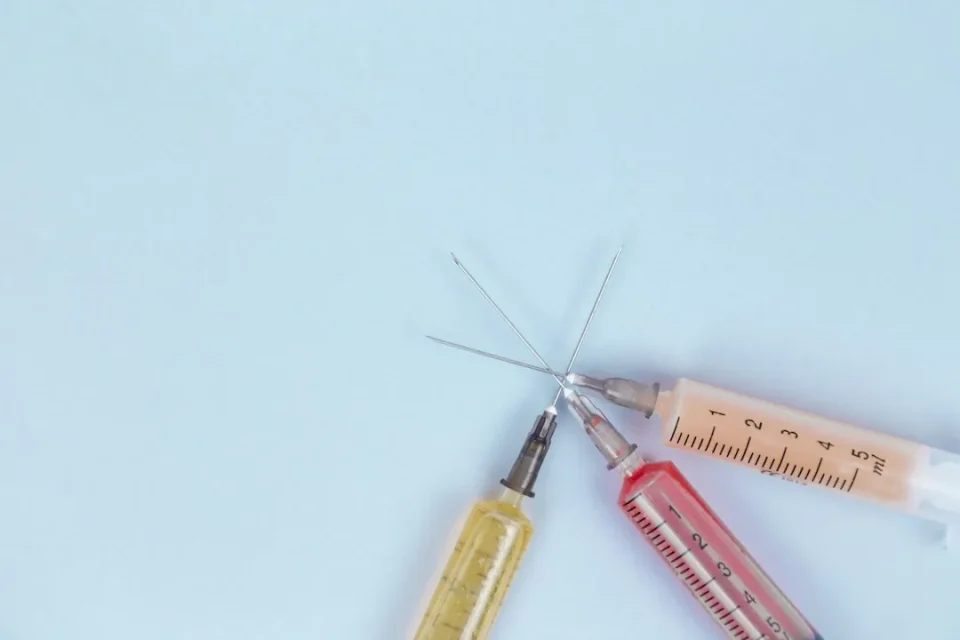
Injectables are shifting from intravenous (IV) infusions toward subcutaneous administration and more home-based, self-administration models—trends that are reshaping treatment settings and commercial performance across oncology and metabolic therapy classes.
Injectables: Subcutaneous delivery over IV administration
Manufacturers are increasingly developing subcutaneous formulations of biologics originally given by IV infusion, a move presented as more convenient for patients and a way to extend or enhance product life cycles. Several oncology blockbusters now offer subcutaneous options alongside their IV formulations, providing additional administration settings and shorter dosing times compared with IV infusions.
Merck & Co.’s Keytruda Qlex (pembrolizumab and berahyaluronidase alfa-pmph) was approved by the U.S. Food and Drug Administration in September 2025 for subcutaneous administration in adults across most solid tumor indications. Keytruda Qlex is given as a one-minute injection every three weeks or a two-minute injection every six weeks, compared with a 30-minute IV infusion for Keytruda. Keytruda and Keytruda Qlex reported combined first-half 2026 results of $16.4 billion, with Keytruda Qlex contributing $590 million.
Johnson & Johnson’s Darzalex Faspro (daratumumab and hyaluronidase-fihj), first approved by the FDA in 2020, is approved for multiple myeloma indications and was the first subcutaneous CD38-directed antibody to treat patients with multiple myeloma, according to J&J. Darzalex-branded products had combined sales of $12.41 billion for the first nine months of 2026. J&J does not break out sales of Darzalex Faspro separately. Genmab, partnered with J&J, receives royalties on worldwide net sales of Darzalex—both the intravenous and subcutaneous products—under an exclusive worldwide license granted to J&J to develop, manufacture, and commercialize daratumumab.
Sanofi’s Sarclisa Escena (isatuximab-irfc) was approved by the FDA in July 2026 as the first subcutaneous anticancer treatment delivered via an on-body injector. Sarclisa Escena is approved for multiple myeloma indications and can be administered both with an on-body injector and by manual subcutaneous injection. The on-body injector was developed by Enable Injections using its enFuse On-Body Delivery System; Sarclisa Escena was approved with Enable’s CirCLIQ on-body injector built on the enFuse platform.
J&J is also applying subcutaneous delivery to Rybrevant Faspro (amivantamab and hyaluronidase-lpuj), the subcutaneous form of the IV-administered Rybrevant (amivantamab). Rybrevant Faspro was approved in December 2025 for adults with EGFR-mutated non-small cell lung cancer, including certain exon 19 deletions. In July 2026, the FDA granted priority review for a supplemental biologics license application for Rybrevant Faspro for recurrent or metastatic head and neck squamous cell carcinoma. For the first six months of 2026, cumulative global sales for Rybrevant and the Leclaza/Lazcluze (lazertinib) combination therapy totaled $546 million; the company does not break out sales of Rybrevant Faspro separately.
Bristol-Myers Squibb’s Opdivo Qvantig (nivolumab and hyaluronidase-nvhy), approved in 2024 for subcutaneous injection across multiple solid tumor indications, has seen modest uptake compared with the IV Opdivo. Opdivo Qvantig posted third-quarter 2026 revenues of $67 million versus $2.53 billion for IV-administered Opdivo.
Self-administration: GLP-1s and home use
A major growth driver for the injectables market has been the commercial success of glucagon-like peptide-1 (GLP-1) class drugs and related agents for type 2 diabetes and obesity—particularly the obesity indication—where the products are self-administered at home. Notable examples include Eli Lilly’s Mounjaro/Zepbound (tirzepatide), a dual GIP and GLP-1 activating medication for type 2 diabetes and obesity, and Novo Nordisk’s Wegovy/Ozempic (semaglutide) for the same indications.
Novo has introduced oral versions of Wegovy (semaglutide) for treating obesity, and Lilly has an oral obesity drug, Foundayo (orforglipron), a once-daily small-molecule (non-peptide) oral GLP-1 receptor agonist for treating obesity. The injectable forms of these drugs, particularly for obesity, were key to their initial commercial success. Lilly’s Zepbound (tirzepatide) is available as a single-dose autoinjector pen or a multi-dose KwikPen for chronic weight management; Lilly’s Mounjaro (tirzepatide) is formulated in a single-dose pen or KwikPen for type 2 diabetes. Novo’s Wegovy/Ozempic (semaglutide) is delivered via pre-filled pen injectors for weight loss and type 2 diabetes.
These developments underscore two concurrent trends in injectables: the migration of hospital-based IV therapies to faster subcutaneous options that broaden administration settings, and the expansion of self-administered injectable therapies that enable home treatment and have driven rapid market growth in metabolic indications.
