

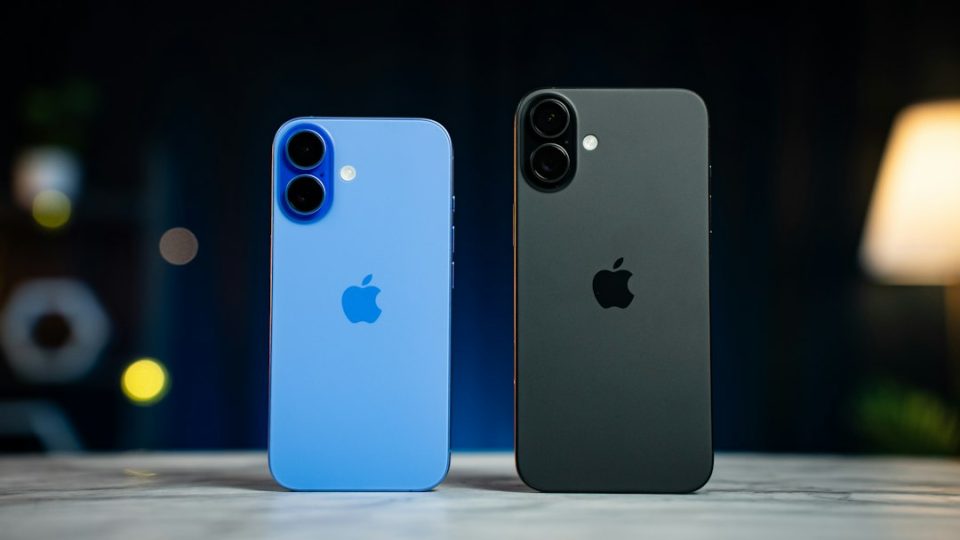
Apple’s latest lineup places a new question in buyers’ hands: the iPhone Duo, a foldable iPhone starting at $1,999, joins the iPhone 18 Pro and iPhone 18 Pro Max, which start at $1,199 and $1,299 respectively, and all three share the same A20 Pro chip.
The Duo is not a Pro model: Apple brands its rear camera array the 48-megapixel Dual Fusion system rather than the Pro Fusion system, and the name contains no Pro. The $700 premium over the iPhone 18 Pro Max buys a folding 7.6-inch inner display, not a superior camera.
What the three models share
All three phones use the A20 Pro chip with a 6-core CPU, 7-core GPU with Neural Accelerators, a dual 16-core Neural Engine and hardware-accelerated ray tracing. They include Apple C2 modem (except on the Pro Max in the United States), the N1 wireless networking chip, Wi‑Fi 7, Bluetooth 6, Thread, and the second-generation Ultra Wideband chip. Displays are Super Retina XDR OLEDs with ProMotion up to 120Hz, Always-On display, Dynamic Island and up to 3000 nits peak outdoor brightness. All use Ceramic Shield 2 front glass and Ceramic Shield back and are rated IP68 to 6 meters. Camera features common to all include Camera Control, a 48MP Fusion Ultra Wide at 13mm f/2.2, Photographic Styles 3, Dual Capture, smart focus tracking, and 48MP macro photography. They run iOS 27 with Apple Intelligence and Siri AI, offer Emergency SOS, Crash Detection, Roadside Assistance, Messages and Find My via satellite, USB-C with USB 3 speeds, MagSafe and Qi2 wireless charging up to 25W, dual eSIM, and the same storage tiers: 256GB, 512GB, 1TB and 2TB.
iPhone Duo: Display and design differences
The iPhone Duo’s headline hardware difference is its folding display: a 7.6-inch inner display (1878-by-2670 at 430 ppi) and a 5.4-inch outer display (1398-by-2034 at 460 ppi). By comparison, the iPhone 18 Pro has a 6.3-inch display (2622-by-1206 at 460 ppi) and the Pro Max a 6.9-inch display (2868-by-1320 at 460 ppi). The Duo’s inner display has a nano-texture finish and wide-angle OLEDs, and it supports Apple Pencil with USB-C.
Physically, the Pro models use an aluminum unibody and a polished titanium frame with a 3D-printed hinge cover on the Duo. The Pro models include an Action button and Face ID enabled by TrueDepth; the Duo replaces Face ID with Touch ID in the side button and drops the Action button. The Pro models list two dual ambient light sensors, while the Duo has four. Color and material options differ: Pro colors are Black, Silver, Glacier and Burgundy; Duo colors are Night Sky and Star White.
Environmental materials differ: the Pro models are made with 40% recycled content including 85% recycled aluminum in the enclosure, 100% recycled rare earth elements in all magnets, 80% recycled steel in the battery enclosure and vapor chamber chassis, and 100% recycled tungsten in the Taptic Engine, with 50% of manufacturing electricity sourced from renewable electricity. The Duo is made with 35% recycled content including 100% recycled aluminum in the internal structural frame, 85% recycled titanium in the enclosure, and 100% recycled titanium in the 3D-printed hinge cover, with 60% of manufacturing electricity sourced from renewable electricity.
Cameras: Why the Pro models remain more camera-focused
The iPhone 18 Pro and Pro Max use the 48MP Pro Fusion camera system; the Duo uses the 48MP Dual Fusion system. The Pro models’ Fusion Main camera is 24mm with a second-generation sensor-shift OIS and 100% Focus Pixels, a variable aperture (f/1.48, f/1.8, f/2.8 and f/4.0) and a 12MP optical-quality 2x “telephoto” sensor crop at 48mm. The Pro models also include a 48MP Fusion Telephoto camera at 100mm (4x) with tetraprism optics, f/2.8, 3D sensor-shift OIS and autofocus, plus a LiDAR scanner, giving optical zoom options of 0.5x, 1x, 2x, 4x and 8x and an 8x optical-quality zoom in and 2x optical zoom out for a 16x optical-quality zoom range.
The Duo’s camera setup uses a 48MP Fusion Main camera at 26mm with sensor-shift OIS and Hybrid Focus Pixels and a fixed f/1.6 aperture. Its telephoto approach is optical-quality sensor crops: a 12MP optical-quality 2x telephoto crop at 52mm from the Main camera and a 12MP optical-quality 8x telephoto sensor crop at 200mm from the Fusion Telephoto camera, yielding 0.5x, 1x and 2x optical zoom options and a 2x optical-quality zoom in, 2x optical zoom out for a 4x optical-quality zoom range. Digital zoom limits differ: up to 40x for photos and up to 24x for video on the Pro models, versus up to 10x for photos and up to 6x for video on the Duo. The Pro models include an adaptive True Tone flash and four studio-quality mics; the Duo has a True Tone flash and replaces four studio mics with its own microphone configuration. The Duo also lacks the Pro models’ LiDAR scanner.
Pro capture features and formats
The Pro models offer professional controls for lens aperture, shutter speed, white balance and a viewing histogram, ProRAW (including Apple Reference Image for the Fusion Main camera), spatial photos, spatial video recording at 1080p 30 fps, ProRes up to 4K at 120 fps with external recording, ProRes RAW, Apple Log 2 and Academy Color Encoding System (ACES) Genlock. Image capture formats for the Pro models include HEIF, JPEG and DNG; video formats include HEVC, H.264, ProRes and ProRes RAW. The Duo provides Pro controls to a lesser extent: it captures HEIF and JPEG images and records HEVC and H.264 video, and it does not support ProRAW, ProRes, ProRes RAW or the Pro models’ advanced recording and playback formats.
Front cameras and FaceTime behavior
The iPhone 18 Pro and Pro Max have an 18MP Center Stage front camera at f/1.9 with autofocus and Front camera Pro controls including ProRAW, ProRes and ProRes RAW. The Duo has a 12MP Center Stage outer camera at f/2.2 and an under‑display FaceTime camera on the inner display at f/1.8 that is limited to 1080p video at 30 or 60 fps and does not support Night mode, portraits or Photographic Styles. The Duo supports FaceTime using optical zoom with the rear camera and Zoom with the rear camera in FaceTime.
Battery, charging and physical trade-offs
The Pro models use a single built-in rechargeable battery; the Duo uses dual built-in rechargeable batteries. Rated typical-use battery life is up to 24 hours for the iPhone 18 Pro and up to 30 hours for the Pro Max; the Duo is rated up to 24 hours typical use. For video playback, the iPhone 18 Pro is rated up to 36 hours and the Pro Max up to 45 hours, while the Duo is up to 44 hours using the outer display and up to 31 hours using the inner display. For streamed video playback the Pro is up to 33 hours and the Pro Max up to 40 hours; the Duo is up to 37 hours streamed using the outer display and up to 26 hours streamed using the inner display. Fast charging differs slightly: the Pro models reach 50% in around 15 minutes; the Duo reaches 50% in around 20 minutes.
When closed the Duo is wider and thicker than either Pro model and slightly heavier than the Pro Max: the iPhone 18 Pro measures 5.91 inches (150.0 mm) by 2.83 inches (71.9 mm) and 0.34 inch (8.75 mm) thick, weighing 7.44 ounces (211 grams). The Pro Max measures 6.43 inches (163.4 mm) by 3.07 inches (78.0 mm), 0.34 inch (8.75 mm) thick, weighing 8.78 ounces (249 grams). The Duo measures 4.64 inches (117.8 mm) closed and 6.48 inches (164.6 mm) open by 3.31 inches (84.1 mm) closed (6.48 inches open), with a depth of 0.44 inch (11.3 mm) closed and 0.21 inch (5.2 mm) open, weighing 8.96 ounces (254 grams).
Price and who should buy which model
Pricing at launch is: 256GB — iPhone 18 Pro $1,199, iPhone 18 Pro Max $1,299, iPhone Duo $1,999; 512GB — $1,399, $1,499 and $2,199; 1TB — $1,799, $1,899 and $2,599; 2TB — $2,399, $2,499 and $3,199. A 1TB iPhone 18 Pro Max is $100 cheaper than the entry‑level iPhone Duo, which itself starts at 256GB. At the same 256GB capacity, the Duo costs $700 more than the Pro Max and $800 more than the Pro.
For most buyers, the iPhone 18 Pro or Pro Max is the better choice: they offer the same A20 Pro chip, a more versatile camera system including variable aperture and a dedicated Telephoto camera, and a lower price. Choose the iPhone 18 Pro if you prefer a smaller, lighter phone; pay $100 more for the Pro Max if you want a larger screen and longer battery life.
Buy the iPhone Duo if you frequently need a larger screen for reading, documents, note taking or watching video and if you expect to unfold and use the 7.6‑inch display and Apple Pencil support several times a day. The Duo may reduce the need for a separate tablet, but buyers must accept its camera compromises, inferior front cameras, the replacement of Face ID with Touch ID, the absence of the Action button, the lack of LiDAR, the different flash and microphone setup, and its larger closed dimensions and slightly heavier weight. If you are unsure how often you would use the folding screen, the Pro models remain the stronger, more camera-capable purchase.
The iPhone 18 Pro and iPhone 18 Pro Max are available to pre‑order now. iPhone Duo pre-orders open on October 16 ahead of an October 23 release.
