

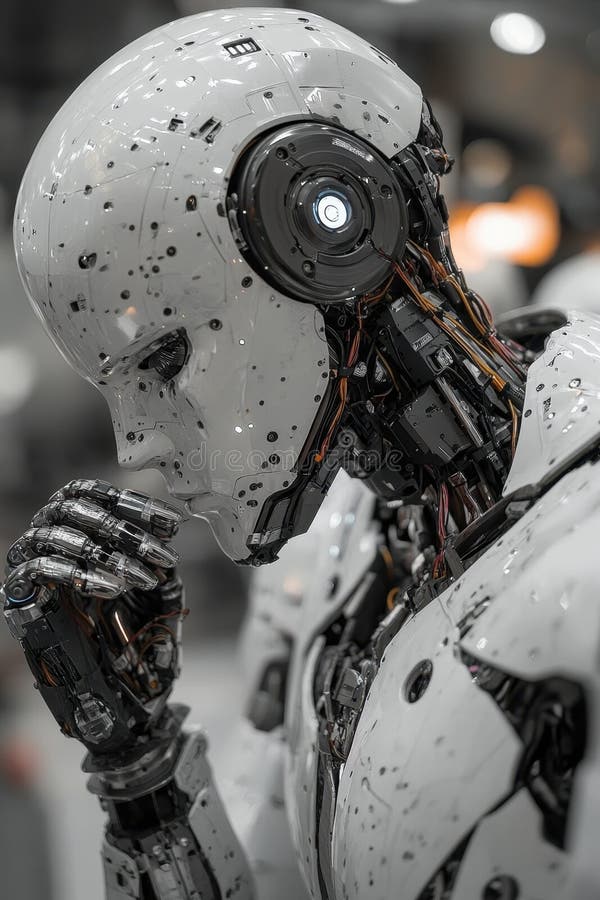
Headline: U.S. Bars New Imports of Humanoid and Other Critical Robots, Citing National Security Risks
The U.S. Federal Communications Commission (FCC) has announced a ban on importing new humanoid robots and certain other critical devices — notably power inverters and quadruped (“robot dog”) platforms — pointing to national security, cybersecurity and supply‑chain vulnerabilities. The restrictions are aimed primarily at overseas manufacturers, with Chinese companies singled out by regulators.
What the ban covers
– New versions of humanoid robots and quadruped robots are explicitly targeted.
– The FCC cited cybersecurity threats and risks tied to offshore production and fragile supply chains as the main rationales for the prohibition.
Washington’s rationale
FCC Chair Brendan Carr framed the move as an effort to “secure America’s critical supply chains.” Beyond the possibility of hacking, officials say heavy reliance on foreign hardware represents a strategic weakness that could lead to supply interruptions for critical systems.
Beijing’s response
China condemned the decision, accusing the U.S. of stretching the national security concept to disadvantage Chinese firms. Ministry of Foreign Affairs spokesperson Mao Ning said “protectionism will not make the United States more competitive,” warning that the measure harms the interests of American businesses and consumers. Beijing has vowed to take “all necessary measures” to defend its companies’ rights.
Market context
Analysts note that China dominates the humanoid robot market — an estimated 85% share globally. Omdia data cited by analysts indicate roughly 15,000 humanoid units were shipped worldwide in 2025; Unitree and AGIBOT, two major Chinese vendors, reportedly each shipped more than 5,000 units, while U.S. firms such as Tesla and Figure AI shipped only a few hundred units apiece.
Power inverters and other hardware
Power inverters — used to convert DC to AC in renewable-energy systems, data centers and household appliances — are also included in the restrictions. Analysts say the measure does not appear to bar continued use of devices already in service in the U.S., nor does it block sales of Chinese models that have already received prior U.S. approval.
Industry and competition impacts
Observers point out that the ban removes a potentially large future U.S. market for Chinese manufacturers and may shield American developers from downward price pressure. However, some analysts argue the measure is unlikely to substantially slow China’s humanoid-robot progress given the size of its domestic market and alternative export channels.
Risks to international collaborations
The restrictions could complicate cross‑border partnerships. Omdia’s Lian Jye Su notes that collaborations — for example, the use of a Unitree humanoid chassis in an Nvidia reference‑robot prototype unveiled in June — may be disrupted. (The original report provided to us was truncated and cut off mid‑sentence regarding recent U.S. Pentagon actions toward Unitree; the final details were not available in the source material.)
Bottom line
The FCC’s action signals a tightening of U.S. controls over emerging robotics hardware viewed as strategically sensitive. The practical effects will depend on enforcement details, how broadly the ban is applied, and whether the U.S. pursues parallel measures to accelerate domestic robotics supply chains.
