

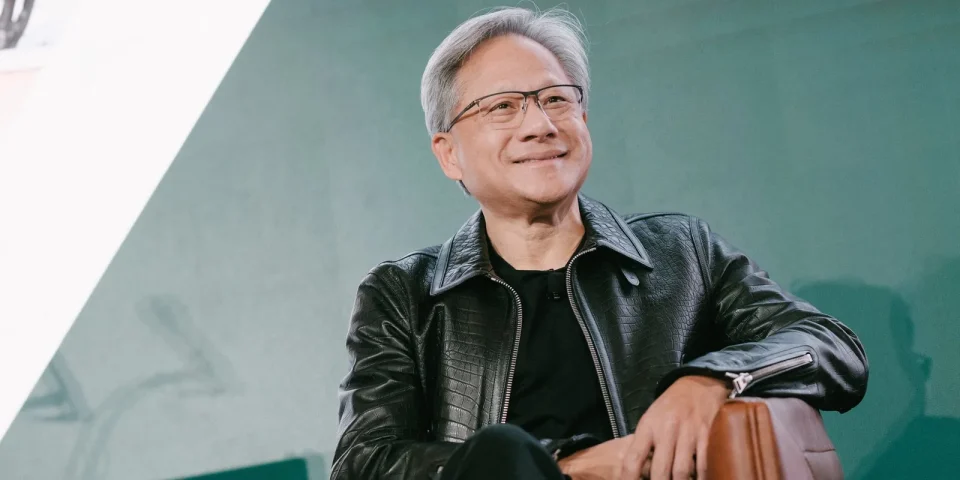
Jensen-Gate — the disclosure of Nvidia CEO Jensen Huang’s extramarital affair and questions about possible Chinese espionage connected to it — appears unlikely to derail the AI boom, according to Wall Street’s reaction on Monday.
Huang has admitted to being unfaithful, and Nvidia’s board is investigating whether he was targeted by a foreign intelligence operation. US intelligence officials believe Alice Huang, an executive at Nvidia customer Megaspeed, was recruited to spy for China. That assessment has not been independently verified. Nvidia’s board says it has no reason to believe company secrets or national security were compromised.
Market and industry signals suggest demand for AI will persist. Software developers are unlikely to abandon tools such as Claude Code and Codex because of the CEO’s private life, and the roughly 1.2 billion weekly users of ChatGPT are not expected to stop using the service. Businesses are also unlikely to halt efforts to deploy AI to save time, cut costs, and raise productivity; Western firms might even shift away from Chinese open-weight models, potentially benefiting US AI companies such as Anthropic and OpenAI.
“We still foresee significant upside for AI chipmakers and anticipate technological advancements and the need for significantly more computing power in the years ahead,” Morningstar senior equity analyst Brian Colello wrote on Monday, adding that Nvidia’s forecast of $3 trillion to $4 trillion of annual AI infrastructure spending by 2030 should still come to fruition. Colello maintained a $310 fair value estimate for Nvidia’s stock.
Market reaction and leadership risks
Nvidia dominates the market for the powerful chips needed to run large AI models, and Huang has been a key figure in building that position. His departure could disrupt company strategy, partner relationships, and financing arrangements; potential congressional probes could add further headaches. Nvidia shares fell about 4% on the news, while rival chipmaker AMD jumped roughly 13%, suggesting demand remains strong but might shift if Huang is forced to step down.
There is also the question of whether the scandal will affect Nvidia’s ability to sell GPUs in China. Megaspeed has faced scrutiny over whether overseas data-center arrangements allowed Chinese customers access to Nvidia chips despite US export restrictions. If the scandal makes such arrangements harder or leads to a de facto end to GPU sales in China, more of Nvidia’s supply could remain available for American customers — companies such as Amazon, Microsoft, and Google that are spending heavily to build AI data centers. There is no guarantee additional supply would lower prices, but it is a plausible upside for the US given continued strong demand.
How Jensen-Gate could shift GPU supply
Huang has long lobbied Washington to loosen restrictions on chip sales to China, with limited success. Bernstein chip analyst Stacy Rasgon questioned whether alleged influence from Alice Huang was necessary, noting Huang has pursued broader sales into China for years on commercial grounds. The scandal could nonetheless complicate China sales and associated arrangements.
The episode could also fade: Huang could remain Nvidia’s CEO, and there is no indication that customers are canceling orders outside China, where the government has been blocking some GPU sales. US President Donald Trump announced his support when the allegations first arose.
The future of AI depends on whether people and businesses keep finding the technology useful and whether companies can build enough infrastructure to meet demand. Jensen Huang’s romantic life does not change either equation; if anything, the episode might leave more chips available in the US to power AI ambitions.
