

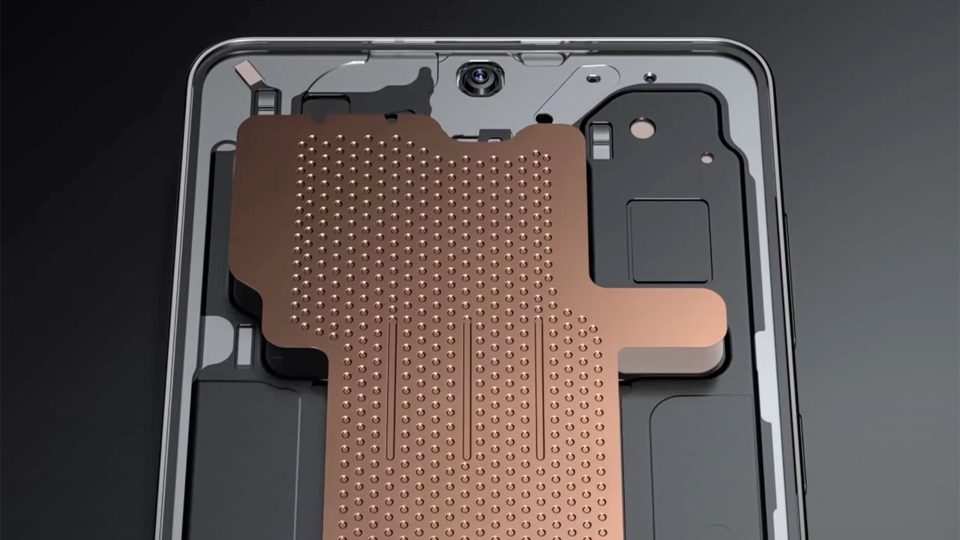
Samsung is exploring advanced cooling technologies for its upcoming flagship smartphones, potentially incorporating liquid or air cooling systems to manage heat generated by intensive AI workloads. This approach is inspired by gaming phones like those from Nubia, which already use hybrid cooling methods. Samsung aims to ensure that future models, such as the Galaxy S27 Ultra and Galaxy S28 Ultra, maintain optimal performance without relying solely on passive cooling solutions.
The current Exynos 2600 chip, used in models like the Galaxy S26 and Galaxy S26+, features innovative Heat Pass Block technology, which has demonstrated excellent thermal stability. However, Samsung anticipates that future demands for on-device AI and high-performance processing will necessitate more robust active cooling systems.
A research team at Samsung’s Production Technology Research Institute is prioritizing a liquid-based cooling system with a sealed, circulating loop directly connected to the chipset. While air cooling is also being considered, concerns about fan noise and increased device weight make liquid solutions more appealing.
Samsung’s development of these cooling solutions aims to tackle thermal throttling, a common issue in flagship phones under heavy AI processing loads. It remains uncertain whether these technologies will be ready for the Galaxy S27 series, including the high-end Galaxy S27 Ultra model.
