

A new AI platform designed to manage the entire scientific research workflow was unveiled Friday at the 2026 World AI Conference in Shanghai, promising to accelerate discovery by linking models, agents, data and automated labs.
How the AI platform spans the full research process
Shusheng Duanyan, developed by the Shanghai Artificial Intelligence Laboratory, integrates scientific large language models, professional intelligent agents, experimental data and embodied automated equipment to handle research tasks from hypothesis formulation through experimental verification. The AI platform automates candidate generation, prioritization and iterative testing, routing results between computational systems and laboratory robots for continuous refinement.
A test case in protein optimization
Researchers have already applied the AI platform to protein optimization, an area with an astronomical number of possible molecular arrangements. In one reported case, the number of combinations reached 20^219. After computation and ranking by the platform, that space was reduced to only dozens of high‑potential candidates. Those candidates were then sent to a laboratory where robots ran experiments around the clock and fed results back into the system for further optimization.
“What the platform is like a ‘super brain’ assisting scientists and a powerful tool for scientific discovery. It helps scientists return to the essence of the research question itself, improves efficiency and provides valuable inspiration,” said Fu Xujun, head of the Scientific Research Product Platform Department of Shanghai Artificial Intelligence Laboratory.
Scope and sectors targeted
The platform has been applied across six core research areas: life sciences, key materials, semiconductors, nuclear fusion, quantum mechanics and Earth meteorology. By coupling computational recommendation with automated experimentation, the AI platform aims to shrink evaluation timelines and focus human researchers on higher‑level interpretation and design.
Launch context at the World AI Conference
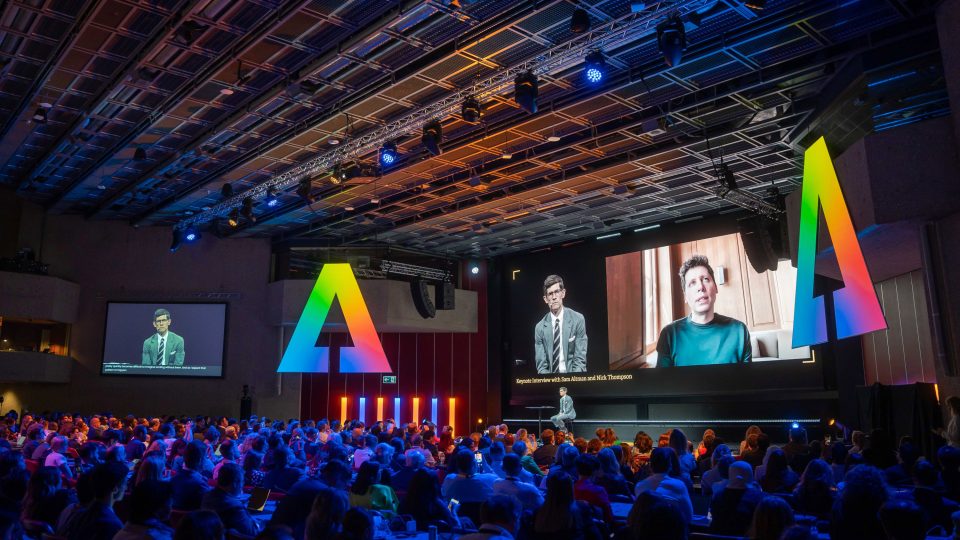
The debut took place at the 2026 World AI Conference and High‑Level Meeting on Global AI Governance, held in Shanghai from July 17 to 20 under the theme “AI Partnership for a Brighter Future.” Organizers said more than 1,100 enterprises participated and the event featured the global debut of over 300 new products and technologies, among them Shusheng Duanyan.
A tool for scaling scientific workflows
By centralizing model-driven proposal, automated lab execution and continuous feedback, the AI platform positions itself as a tool to scale complex experimental programs. Its early application to protein design illustrates how combining large‑scale computation and robotic experimentation can pare vast search spaces to a manageable set of candidates, while keeping human researchers in the loop for interpretation and direction.
The platform’s introduction at an international AI summit highlights growing interest in embedding AI directly into laboratory workflows, though the long‑term impact on research practices will depend on broader adoption and further demonstrations across the stated core areas.
