

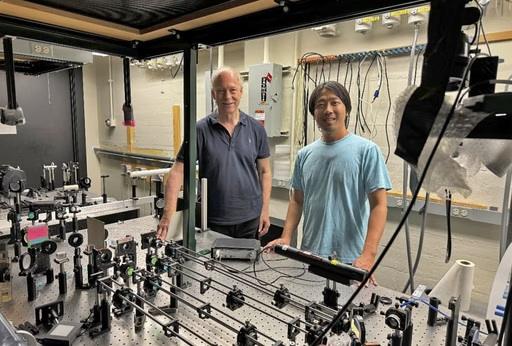
CAMBRIDGE, Mass., Oct. 22, 2026 — Cambridge Heavy Industries emerged from stealth and announced a $6.2 million seed round led by Azolla Ventures, with participation from Overlay, the Mass Clean Energy Center, the Neta Foundation, the Rothrock family and P3A.
The company, led by co-founder and CEO Dr. Yun Kai and co-founders Raffi Freeman, Professor Keith Nelson and Dr. Steve Kooi, said it will use the funds to build its first compact fusion reactor at its Massachusetts facility. Planned expenditures include procurement of an ultrafast laser, optical components, neutron diagnostics and expansion of the team.
Compact fusion technology and prototype results
Cambridge Heavy Industries uses commercial lasers to generate the extreme pressures and temperatures needed to create fusion-relevant conditions, enabling production of rare isotopes via neutron bombardment and, ultimately, fusion power. The company says its compact machines allow weekly testing and upgrades rather than the multi-year R&D cycles typical of conventional fusion approaches, and rely on off-the-shelf equipment without customization.
The company attributes a breakthrough in shockwave science to achieving a 400x higher compression efficiency compared with past laser-based fusion efforts while requiring a fraction of the capital expenditure. Its prototype, about the size of two dinner tables, reached pressures as high as the center of the Earth (350 GPa) using only tens of millijoules of energy.
Tritium production and commercial applications
Cambridge Heavy Industries will configure its first systems to produce tritium, a rare radioactive hydrogen isotope that faces significant global commercial shortages and is used by the majority of fusion research reactors today. The company noted tritium currently sells for approximately $33 million per kilogram. Beyond isotope production, Cambridge Heavy Industries identifies additional commercial opportunities for its neutron sources in material defect engineering and neutron imaging.
“Cambridge Heavy Industries was inspired by decades of research and a clear vision for applying novel engineering to the proven science of inertial confinement fusion, making it more compact and efficient,” said Dr. Yun Kai, co-founder and CEO of Cambridge Heavy Industries. “Fusion power leaders have a tritium supply problem that could significantly slow down the sector’s growth. Our technology is in the unique position to solve this challenge. We are appreciative of our investors for their financial and operational support in bringing us to this important milestone.”
