

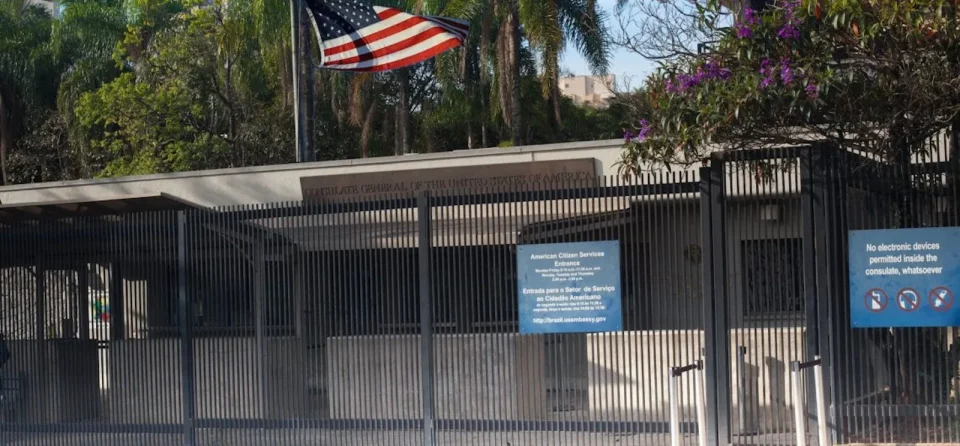
All routine consular operations at every U.S. diplomatic facility in Brazil have been suspended with no resumption date announced, halting visa processing and in-person American citizen services hours before the presidential vote scheduled for Sunday, October 4. The U.S. Embassy in Brasília and consulates in São Paulo, Rio de Janeiro, Recife and Porto Alegre remain structurally open, but their consular windows are closed and appointments have been postponed.
What the consular shutdown means
The U.S. Embassy issued a security alert instructing U.S. nationals who need urgent assistance not to visit any diplomatic facility and to contact the embassy duty officer by phone. Australians were also advised to avoid U.S. diplomatic facilities after the Australian ambassador in Brasília announced the Australian embassy would close on Friday citing the U.S. security alert; Australians needing help were directed to an emergency line in Canberra. For Brazilians with scheduled visa interviews, appointments were postponed immediately with no timeline for resumption.
The investigation: warrants served, no suspects named
Brazil’s federal police executed search-and-seizure warrants in São Paulo and the Federal District as part of a security investigation into suspected plans that could threaten U.S. diplomatic facilities. Authorities described the operation as preventive and based on cooperation with foreign intelligence agencies. Investigators reported finding no evidence corroborating the originally reported risks, identified no suspects as members of criminal organizations, and seized communications equipment that remains under analysis. The U.S. State Department said it is working closely with Brazilian counterparts but declined to disclose the nature of the threat or whether it is connected to the election schedule.
Diplomatic tensions that help explain the reaction
The closure comes against months of bilateral friction. In late July, Brazil’s Foreign Ministry denied entry visas to two U.S. State Department officials who had sought to travel to Brasília to discuss election integrity; Brazil described the visit as what it appeared to be, while the State Department called it a routine diplomatic visit and labelled accusations of interference a baseless lie. In late May, the Trump administration designated the PCC and Comando Vermelho as Foreign Terrorist Organizations, a classification that took effect on June 5 and was rejected by the Lula government as politically motivated. Earlier incidents this year included anti-American graffiti on a wall of the U.S. Embassy in Brasília in August and the U.S. ordering Brazil’s federal police attaché in Miami to leave the country in April, followed by Brazil pulling the credentials of a U.S. law enforcement liaison in Brasília.
Lula’s allies have publicly framed the closures as Washington’s latest attempt to tilt Sunday’s vote toward Senator Flávio Bolsonaro.
Where the election stands
Sunday’s ballot pits President Luiz Inácio Lula da Silva, 80, seeking a fourth presidential term, against Senator Flávio Bolsonaro. Former President Jair Bolsonaro is serving a sentence of 27 years and three months handed down by Brazil’s Supreme Court in September 2025 for leading a coup attempt after the 2022 election; he is under humanitarian house arrest in Brasília following a July court ruling that extended the arrangement indefinitely on health grounds. Polling shows a close race: a Quaest poll from August 5 had Lula ahead 44% to 39% in a simulated runoff, while a September 22 Quaest poll had Bolsonaro at 42% and Lula at 41%. A Datafolha survey from September 22–24 put first-round support at Lula 40% and Bolsonaro 36%, with a simulated runoff at Lula 47% and Bolsonaro 45%. More than 158 million eligible voters are registered for the vote; if no candidate clears 50% of valid votes, a runoff is scheduled for October 25.
What comes next
The U.S. State Department has not specified when consular services will resume. The Brazilian federal police investigation into the original threat remains active. International monitoring missions, including the European Union and the Carter Center, remain in the country and have not signalled plans to withdraw. U.S. nationals with urgent consular needs must contact the embassy emergency duty officer by phone and are advised to avoid all diplomatic facilities until further notice; Australians should contact the Canberra emergency line. Depending on the investigation’s findings or lack thereof, the political fallout from this pre-election closure could outlast the vote itself.
