

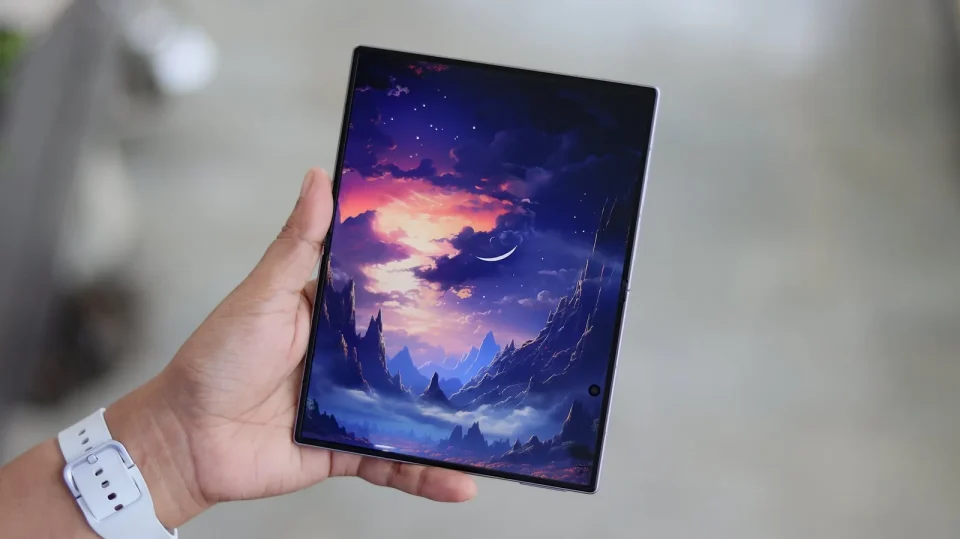
After more than a decade of using regular, non-foldable phones, I started using the Galaxy Z Fold 8 exclusively earlier in the summer as my first foldable. The device has impressed me enough to nearly erase my biggest worries about display quality and durability, though those concerns still exist among people who have not used a foldable. Independent durability videos can be informative and entertaining, but they can also be misleading.
Galaxy Z Fold 8 foldable display: Does it feel like glass?
Almost. The inner foldable panel is surprisingly rigid, likely helped by Samsung’s titanium backplate and Flex Titanium technology. Blindfolded, I honestly do not know if I could tell the difference between the foldable panel and a conventional glass display. The cover screen feels ever so slightly more rigid by comparison, but only marginally. The foldable screen also sounds like glass when you tap it with a fingernail.
Does the foldable display behave like glass?
Not entirely. The obvious distinction is that the panel folds, something rigid glass cannot do. More importantly, there is a clear difference between tapping and dragging with a fingernail. Tapping the screen — an action I did many times, intentionally and accidentally while gaming — never made me fear damage. Dragging a fingernail across the panel, however, behaves more like plastic and can leave a permanent mark. I only performed that test deliberately before writing this piece and strongly advise others not to try it. In three months of regular use I had not left a permanent mark by accident, and fingernail marks became the least of my concerns once I adopted the Fold 8 as a daily driver. It is possible to damage the foldable screen with a fingernail if you try, but accidental damage from normal use did not worry me.
What does the crease feel like?
Samsung’s crease is almost invisible and, visually, only causes a very slight warp across the area that is hard to notice without looking closely. In my experience, the distortion of past Edge curved displays was more noticeable. You can feel the crease if you drag a fingertip across it; fingertips are very tactile and the sensation is noticeable, especially with eyes closed. That said, the crease does not bother me during regular use and does not constantly draw my attention.
Care, scratches and maintenance
The foldable screen’s protective layer does not extend edge to edge, leaving a small gap near the bezels where dust can gather. That requires a bit more careful cleaning than on a rigid screen; a cotton swab can help reach those edges. I learned this the hard way: on a windy day in the park I wiped dust and pollen from the big screen with a soft cloth and left a tiny micro-scratch across the crease. The scratch is effectively invisible unless I use a blank, bright wallpaper, and it taught me to blow away larger particles before wiping. In short, the Fold 8 needs slightly more attentive cleaning to avoid trapping particles between the screen and a cloth.
Final thoughts
Overall, the Galaxy Z Fold 8 has been far less of a concern than I expected. While the foldable panel is not flawless or indestructible, it surpassed my expectations: it feels almost like glass, behaves safely under normal tapping, shows a detectable but unobtrusive crease, and only needs a bit more careful maintenance to avoid micro-scratches. If you are curious, try a Fold 8 at a Samsung store to form your own judgment. I am extremely happy with my Fold 8 and hope other users have similar experiences; my impressions reflect how Samsung’s foldable phone experience looked to me in 2026.
