

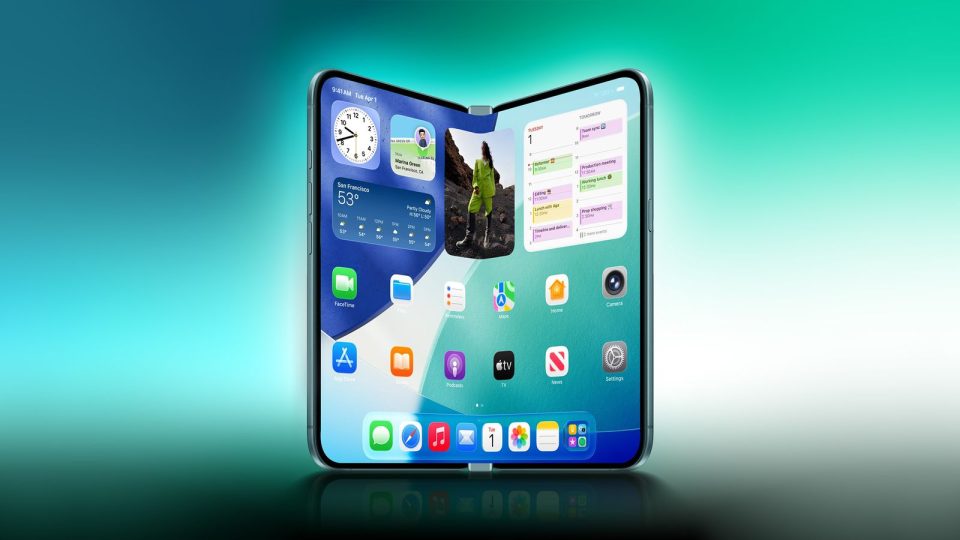
Apple’s first foldable iPhone, the iPhone Ultra, is expected to arrive with several notable omissions compared with the iPhone 18 Pro models: reports and mock-ups suggest it could lack Face ID, a telephoto rear camera, the Action button, a physical SIM tray and mmWave 5G — despite a rumored starting price of at least $1,999.
Why the iPhone Ultra may drop Face ID
The iPhone Ultra is believed to be too thin to accommodate Apple’s TrueDepth camera array required for Face ID, so Apple is expected to use a Touch ID side button for biometric authentication instead. The device would still include front-facing cameras for both displays; the inner display’s camera is rumored to be a 24‑megapixel under‑display sensor, but fingerprint authentication would handle biometrics. The last flagship iPhone with Touch ID was 2016’s iPhone 7, while the iPhone 18 Pro models are reportedly moving Face ID components beneath the screen to reduce the Dynamic Island.
Two rear cameras only — no telephoto
Dummy units circulated by leakers show the iPhone Ultra with two rear cameras, believed to be a 48‑megapixel Wide lens plus an Ultra Wide lens, with no third Telephoto camera like those on the Pro models. Mark Gurman has said people who tested the device were impressed overall but singled out the camera system as a likely disappointment for buyers.
Action button appears absent
Mock-ups and dummy models indicate the iPhone Ultra will lack the Action button and the traditional silent switch. Observed units show a power button and volume buttons only, with the volume controls positioned on the top edge and aligned to the right — a layout likened to the iPad mini — while the left edge appears bare. A Weibo leaker who shared early internal details said the motherboard sits on the right side of the device, and Apple reportedly chose not to route cables across the display, instead running them upward to conserve internal space.
eSIM only — no physical SIM tray
Reports suggest the iPhone Ultra will be eSIM‑only, with no physical SIM card slot, mirroring expectations for the iPhone Air. Both Mark Gurman and analyst Ming‑Chi Kuo are said to expect eSIM‑only configurations in every market where the device launches.
Likely limited to sub‑6GHz 5G (no mmWave)
If the iPhone Ultra uses Apple’s in‑house C2 modem as rumored, it may lack mmWave 5G capability, limiting the device to sub‑6GHz 5G. U.S. iPhone 18 Pro models are expected to retain Qualcomm hardware to support U.S. mmWave bands; Apple does not sell mmWave‑capable iPhones outside the United States. A C2‑based iPhone Ultra would represent another step in Apple’s modem transition but could omit mmWave support.
MagSafe and earlier uncertainties
There was earlier uncertainty about whether MagSafe would be included after dummy models showed no indentations for the internal magnet array. Mark Gurman has since indicated that MagSafe will be present, noting that Apple managed to fit the magnet array into the iPhone Air and that leaked cases for the foldable included a magnetic ring.
Price and launch timing
The iPhone Ultra is widely reported to start at no less than $1,999, with Ming‑Chi Kuo placing the likely price between $2,000 and $2,500. By comparison, the iPhone 17 Pro starts at $1,099 and includes the features the Ultra may lack. The iPhone 18 Pro is expected to see a $200–$300 price increase, and Apple is widely expected to unveil the iPhone Ultra alongside the iPhone 18 Pro and iPhone 18 Pro Max at its “Surprise and Shine” event on Wednesday, September 9.
