

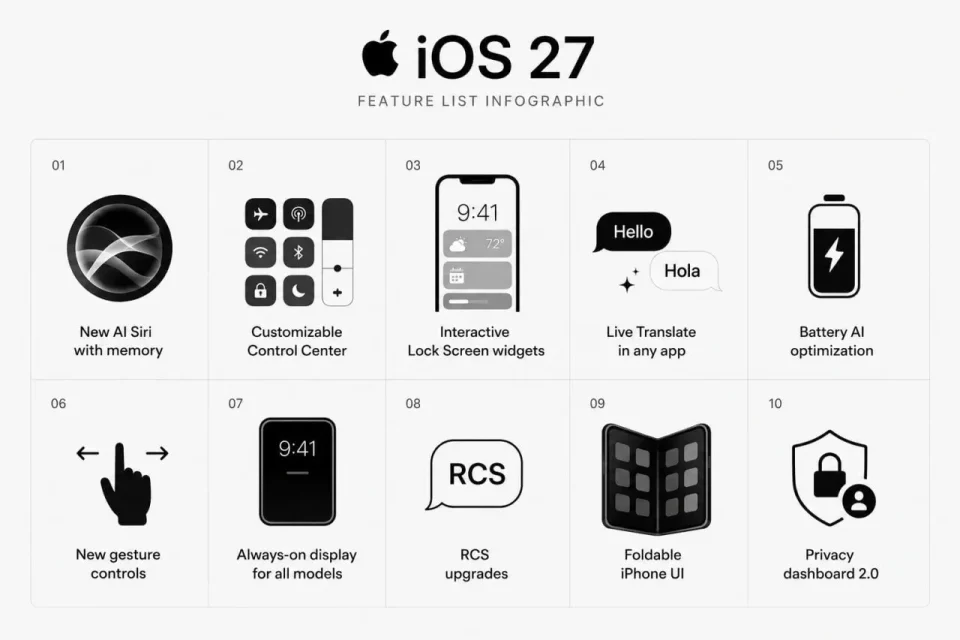
Apple is building a personal memory system that could give Siri a stronger memory of users’ lives, according to code findings in the iOS 27.3 beta shared by code explorer pdfu. The discovery describes a “memory graph” intended to organize information about relationships, places, routines, health, workouts and the motivations or barriers that affect users.
The code also points to the identification of “memory atoms” for facts, opinions, intentions and events, including details about people, places, times and topics involved. Together, those structures would let the system represent both discrete pieces of information and the connections between them.
Siri memory graph and data extraction
The uncovered implementation appears to rely on two kinds of processes to populate the graph. One process turns structured data into insights—for example, by reading name fields in a user’s own contact card. The other is designed to extract insights using an AI model running on-device or via Private Cloud Compute by querying sources such as Siri conversations, Messages, Photos and Health data.
So far, pdfu found only one of the AI-driven processes present in the code. That process is believed to be aimed at identifying motivations, barriers and resources using a set of 60 built-in questions, including questions about routines that might interfere with adequate sleep.
The system appears unfinished: pdfu reports there is currently no process that creates memory atoms. The code explorer also distinguished the graph from a separate store for explicit memories; that store has space for records in Apple’s search system, but nothing in the code writes those records yet.
Both the graph and the explicit-memory store reportedly use Apple’s version of the Kuzu graph database. Apple acquired Kuzu in 2025, but its plans for the technology were unclear when the acquisition emerged earlier this year.
Siri already uses personal context understanding to find information in apps such as Mail, Messages and Photos. The code findings do not indicate when the new memory system might become available or how users would control their data.
